A personal blog about my adventures on fashion, sewing, pattern making and everything else!
Showing posts with label books. Show all posts
Sunday, 25 September 2011
September Book Analysis (and a giveaway!): Custom Couture
I was offered a copy of Custom Couture by Hélène Le Berre for a review or a giveaway on my blog and the promise of a couture book meant I couldn't say no. Let me start by saying this book is not about couture in its strictest. It is all about refashioning and upcycling which, have no doubt, is a fantastic thing. I am always amazed by refashionistas around the world who pick up the most boring garments and transform them into something gorgeous.
The book features 32 refashion ideas divided into four main chapters: Boho, Jet Set, Retro and Diva. The last two are my personal favourites. Photography is outstanding and illustrations and instructions to transform and create these beauties easy to read.
Whilst this book can be a fantastic source of inspiration for all levels of sewists, I think it will lie best with someone with a passion for refashion and up cycling.
And that is the reason I am also giving this copy away to a reader. Whilst I find refashioning exciting I just can't seem to get inspired to do it. And to be honest, I love the "start from scratch" process.
So if you are into refashioning and would like a chance to win this book all you have to do is leave a comment of this post telling me what refashioning you have done and why you like it.
This is open to readers from all around the world and it closes on Friday 30th September 6pm GMT time.
Good Luck!
Monday, 30 May 2011
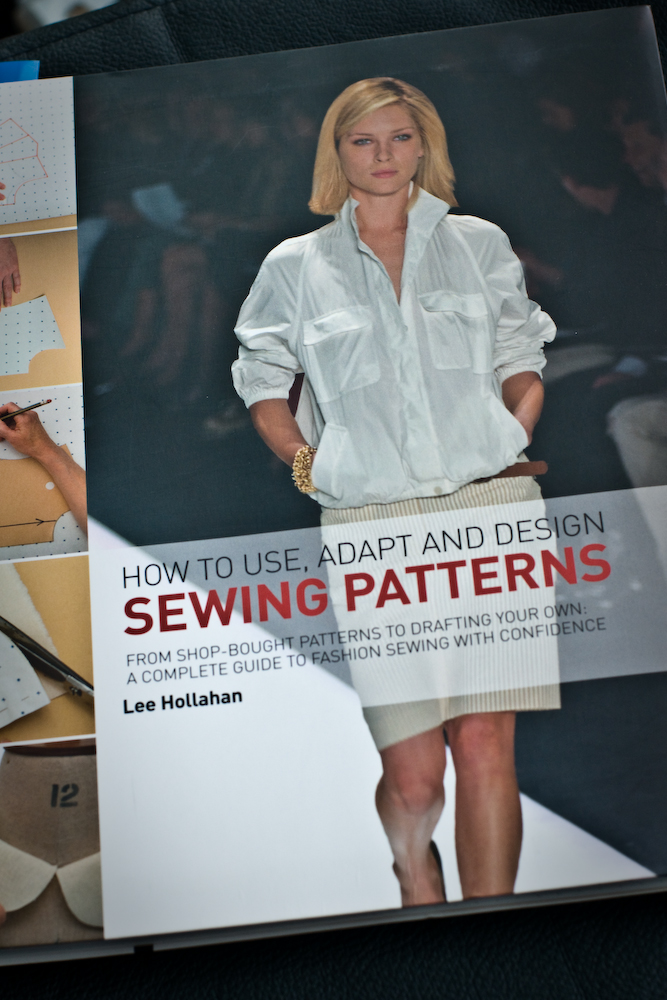
May Book Analysis - "How to Use, Adapt and Design Sewing Patterns" by Lee Hollahan
This month I dwelled deep into one of the first books I bought. "How to Use, Adapt and Design Sewing Patterns" by Lee Hollahan promises to show us "how to get the most from sewing patterns - from choosing the right size to understanding all the different markings and translating flat shapes into wearable garments. You will learn how to change the shaping, length and detailing to suit your own body shape, taste and style."
I think it delivers this, but only at a beginners level. A more experienced seamstress or pattern maker will probably find this book quite basic. That's why I bought it! I was quite a beginner and not yet had a full understanding on many simple basic things. Understanding what notches are and why they are important alongside other markings on commercial patterns helped me a lot on my initial journey.
Chapter 1 is all about tools and equipments (as you so often find in beginners books). All your necessary tools are listed alongside others not fundamental but quite handy, such as pattern master or french curves. Whilst I read on many blogs that you can just use a plate or any round objects to tweak curves in patterns, if you're serious about pattern making these come in very handy.
Chapter 2 is all about commercial patterns. This section was so helpful in deciphering those pattern envelopes, which did puzzle me when I first saw them. Illustrations of commercial patterns, both enveloped and tissue pattern itself, with description of what each marking or text there means, makes it very, very easy to understand.
One of my favourite sections in this chapter is about body shape. I always knew pencil skirts are not the most flattering for me, but I love them and always try using them and styling them. Reading that it is because I have a narrow rectangle body shape helps me accept it and move on.
This chapter guides you in taking accurate measurements and also help understand what wearing ease and design ease is all about. Tips on cutting and marking fabric are also included. All with brilliant illustrations that take the guess work out of it. I can't stress enough how important I think illustrations are for beginners.
Chapter 3 introduces us to pattern alterations. No major creative pattern alterations though, just the basic ones such as shortening and lengthening pieces, moving bust point, moving darts, increasing or decreasing a waist band. A big disappointment is the lack of trousers alterations, apart from length.
Chapter 4 progress to designing own patterns. It explains what pattern blocks are and how you can use them. This book also offers pattern blocks at the end that can be transferred to grid paper and used as a baseline for your creations. No trousers though. It guides us to making our own toile or muslin and altering it to create a perfect fit. In this chapter there are some more advanced pattern alterations such as those relating to armholes and (yay!) trousers, including crotch and leg length.
The idea is that after you have perfected your toile/ muslin you transfer all alterations to your blocks and from these you can start the creative work. A dressform is presented as fundamental for this work, as a lot of the pattern design lines are tried and tested on a dressform.
The book progresses with some pattern manipulation ideas for sleeves, skirts, collars, etc., all wonderfully illustrated and explained. It's fascinating to read how a simple dart alteration can significantly change the whole design of a garment.
Chapter 5 contains the pattern blocks already mentioned and Chapter 6 presents core sewing techniques. I confess I never look at this last chapter as I have a couple of sewing technique books.
I did start work on my own pattern block last year but have not yet progressed any further. I will resume this soon as I do want to dwell further onto pattern making.
My head is full of wonderful designs which I fail to draw successfully so mastering pattern making might be the key to bring this designs into life. Watch this space! ;)
Do you have this book or other pattern marking books? How much do you alter or indeed create your own patterns?
P.S. I apologise for not having this post up yesterday. The fact it's a bank holiday weekend made me feel it was just Saturday yesterday.
I think it delivers this, but only at a beginners level. A more experienced seamstress or pattern maker will probably find this book quite basic. That's why I bought it! I was quite a beginner and not yet had a full understanding on many simple basic things. Understanding what notches are and why they are important alongside other markings on commercial patterns helped me a lot on my initial journey.
Chapter 1 is all about tools and equipments (as you so often find in beginners books). All your necessary tools are listed alongside others not fundamental but quite handy, such as pattern master or french curves. Whilst I read on many blogs that you can just use a plate or any round objects to tweak curves in patterns, if you're serious about pattern making these come in very handy.
Chapter 2 is all about commercial patterns. This section was so helpful in deciphering those pattern envelopes, which did puzzle me when I first saw them. Illustrations of commercial patterns, both enveloped and tissue pattern itself, with description of what each marking or text there means, makes it very, very easy to understand.
One of my favourite sections in this chapter is about body shape. I always knew pencil skirts are not the most flattering for me, but I love them and always try using them and styling them. Reading that it is because I have a narrow rectangle body shape helps me accept it and move on.
![]() |
| I am indeed a narrow rectangle but I am not tall. I am quite petite in fact. |
Chapter 3 introduces us to pattern alterations. No major creative pattern alterations though, just the basic ones such as shortening and lengthening pieces, moving bust point, moving darts, increasing or decreasing a waist band. A big disappointment is the lack of trousers alterations, apart from length.
Chapter 4 progress to designing own patterns. It explains what pattern blocks are and how you can use them. This book also offers pattern blocks at the end that can be transferred to grid paper and used as a baseline for your creations. No trousers though. It guides us to making our own toile or muslin and altering it to create a perfect fit. In this chapter there are some more advanced pattern alterations such as those relating to armholes and (yay!) trousers, including crotch and leg length.
The idea is that after you have perfected your toile/ muslin you transfer all alterations to your blocks and from these you can start the creative work. A dressform is presented as fundamental for this work, as a lot of the pattern design lines are tried and tested on a dressform.
The book progresses with some pattern manipulation ideas for sleeves, skirts, collars, etc., all wonderfully illustrated and explained. It's fascinating to read how a simple dart alteration can significantly change the whole design of a garment.
Chapter 5 contains the pattern blocks already mentioned and Chapter 6 presents core sewing techniques. I confess I never look at this last chapter as I have a couple of sewing technique books.
I did start work on my own pattern block last year but have not yet progressed any further. I will resume this soon as I do want to dwell further onto pattern making.
My head is full of wonderful designs which I fail to draw successfully so mastering pattern making might be the key to bring this designs into life. Watch this space! ;)
Do you have this book or other pattern marking books? How much do you alter or indeed create your own patterns?
P.S. I apologise for not having this post up yesterday. The fact it's a bank holiday weekend made me feel it was just Saturday yesterday.
Sunday, 24 April 2011
Vintage Knitting Gorgeousness - A book review
Now this is why I took on knitting and I'm not giving up!
These are just some of the knitting patterns on the gorgeous book "A Stitch in Time - Vintage Knitting and Crochet Patterns 1920-1949: Volume 1" . Aren't these gorgeous? The book consists of knitting patterns adapted to the modern knitter (current yarns, techniques, etc) but it also includes the original pattern with gorgeous vintage images.
I love sewing but I also love knitwear, and one of my biggest frustrations is not finding any knitwear in shops that I truly like. I dabbled before but it was this book that made me decide to take on knitting and persevering with it. I am already preparing to start one lovely cardigan from this book with a easy stitch pattern. I think many of these will be an awesome addition to my self made wardrobe, don't you think?
Volume 2 is coming out soon and I already pre-ordered!
All images are copyrighted to Arbour House Publishing.
Sunday, 27 March 2011
March Book Analysis -" The Dressmaker's Technique Bible" by Lorna Knight
Welcome to the first of my monthly book analysis, aimed at pushing me to read the books I have. And there are a lot of them, I should say. I should disclaim first and foremost I am no book critic, so all the notations are my own opinions and thoughts.
The Dressmaker's Technique Bible by Lorna Knight was one of the first books (if not the first) I got when I started sewing. My quest to find a easy to understand, comprehensive sewing book didn't take long and after reading good, consistent reviews I decided to buy it.
One of the first things you notice about the book is the compact size and easy to browse features. It's a A5 sized packed in a spiral bound, which helps it stay open on the desk for easy reference. For me these two are massive advantages. I struggle to read books who weight almost as much as I and hate damaging normal binders by opening the book too much, so this is perfect.
The book is divided into four main sections:
1) Getting started: Clear and concise, it lays down all the necessary tools for successful dressmaking, including commonly used haberdashery. It has an interesting section on body shapes and common pattern alterations. It also gives links in clothing items to the different techniques that can be used to make it. Very good for when you working without a pattern or with missing instructions.
2) Fabric manipulation: Every type of seams and seams finishes, darts and pleats and zips are in this sections. One of the first things I did was practice all seams in some canvas to see how difficult they were and how they could best be applied.
3) Techniques: This sections guides you through different types of waistbands, necklines, sleeves, pockets and a few more essential elements of dressmaking. Buttons are also in this chapter and I will be testing some bound buttonholes later using the book as a reference.
4) Embellishment ideas: This is the section I have yet to explore but it covers pretty much every embellishment technique there is, from patchwork and applique, to adding ribbon or beads and smocking, pipping, fringing, felting, etc.
You could be forgiven by thinking that the book is too small and that one A5 page dedicated to inserting an invisible zip or making a bound buttonhole is not enough information. But surprisingly it is, no need to fluff it up. You could basically sew from this book alone and not buy any other basic technique one (but who wants that).
I would recommend this book to both beginners and more experience sewists. Some techniques might be more challenging for beginners but that has to do with the nature of the technique, not the book instruction. For those with more experience, it's a great reference book.
2) Fabric manipulation: Every type of seams and seams finishes, darts and pleats and zips are in this sections. One of the first things I did was practice all seams in some canvas to see how difficult they were and how they could best be applied.
![]() |
| Welt Seam - great for leathers |
4) Embellishment ideas: This is the section I have yet to explore but it covers pretty much every embellishment technique there is, from patchwork and applique, to adding ribbon or beads and smocking, pipping, fringing, felting, etc.
You could be forgiven by thinking that the book is too small and that one A5 page dedicated to inserting an invisible zip or making a bound buttonhole is not enough information. But surprisingly it is, no need to fluff it up. You could basically sew from this book alone and not buy any other basic technique one (but who wants that).
I would recommend this book to both beginners and more experience sewists. Some techniques might be more challenging for beginners but that has to do with the nature of the technique, not the book instruction. For those with more experience, it's a great reference book.
Friday, 4 February 2011
Sewing Books Analysis
One day of this week I found some time, between work meetings, to do a charity shop crawl at a busy town centre. I was so excited as there are about 5 or 6 of these all in the same street. However I was very disappointed. Even bearing in mind the brilliant words by So, Zo... on her post Saving and Sewing (brilliant stuff, by the way) there was nothing that sparked my interest. As I abandoned all hope I decided to enter the remaining one, dedicated to books only and there I managed to salvage the crawl by purchasing two sewing related books.
I decided I will get all the books I purchased so far and aim to read and use them and do a review in this blog! All in agreement, I would aim for one book review a month to be published on the last Sunday of the month, starting March (too soon to do it February).
As I got home I struggled to find room for them (need more book shelves) and was somehow surprised at the amount of sewing books I have managed to accumulate in 7 months. A lot of times I browse the book, get some general ideas and put it aside as a reference book. That sort of bugs me! I want to be able to read it all, find out exactly it's contents, if instructions are easy, etc, etc. So what's stopping me? Nothing other than myself.
I decided I will get all the books I purchased so far and aim to read and use them and do a review in this blog! All in agreement, I would aim for one book review a month to be published on the last Sunday of the month, starting March (too soon to do it February).By no means am I saying that I'm a professional reviewer or critic and I know there are tons of places to get book reviews but I think this will be a good chance to read a (potentially) more in-depth review by someone with a limited sewing experience. It will also "push me" to read it :)
How does this sound to you all? It is something you would like to read?
Subscribe to:
Posts (Atom)